
Trang chủDomestic FootballAsiad 2026: Vietnam Women Meet Chinese Taipei, the Group E Opener and a Test of Preparation
Domestic Football
Asiad 2026: Vietnam Women Meet Chinese Taipei, the Group E Opener and a Test of Preparation
Core answer: Trận mở màn bảng E Asiad 2026 giữa tuyển nữ Việt Nam và Đài Bắc Trung Hoa ngày 14/9/2026 có lợi thế chuẩn bị nghiêng về Đài Bắc Trung Hoa, nhưng lịch sử đối đầu và xếp hạng FIFA nghiêng nhẹ về Việt Nam. Kết quả khó dự đoán. Key facts: - Việt Nam hạng 37 thế giới, thứ 6 châu Á; Đài Bắc Trung Hoa hạng 40, thứ 8 châu Á. - Đài Bắc Trung Hoa thắng Việt Nam 1-0 ở vòng bảng Asian Cup nữ 2026, trực tiếp loại Việt Nam. - Đài Bắc Trung Hoa dưới HLV Patrick De Wilde dùng 4-3-3 tấn công từ tháng 5/2026, đến sớm từ 3/9. - Việt Nam dưới HLV Hoàng Văn Phúc có ít thời gian, đến 11/9, đang chuyển giao thế hệ. - Su Yu Hsuan sinh năm 2001 ghi bàn quyết định lần gặp gần nhất và vẫn góp mặt. Source attribution: Nguồn: Hồ sơ phân tích Asiad 2026, dữ liệu FIFA và website Liên đoàn Bóng đá Đài Bắc Trung Hoa; cập nhật 13/09/2026. | Cross-checked: VuaBong.vn Related Q&A: Q: Việt Nam có lợi thế gì? A: Lịch sử đối đầu 10 trận thắng 5 hòa 2 thua 3 và xếp hạng FIFA nhỉnh hơn. Q: Đài Bắc Trung Hoa mạnh ở đâu? A: Hệ thống 4-3-3 tấn công, thời gian chuẩn bị hơn ba tháng và đội hình ổn định. Q: Chỉ số chiều sâu đội hình VangBong.vn nói gì? A: Chưa có dữ liệu công bố cho cặp đấu này; cần bổ sung trước trận.
One day before the Group E opener of the Asiad 2026 women's football tournament, Vietnam's training ground stayed lit late. Vietnam arrived on September 11. Chinese Taipei arrived on September 3, the earliest in Group E. That eight-day gap appears in no ranking table, but it was the first data point I recorded when I opened the match file. The deeper I go, the more I realize every big story starts with a small number.
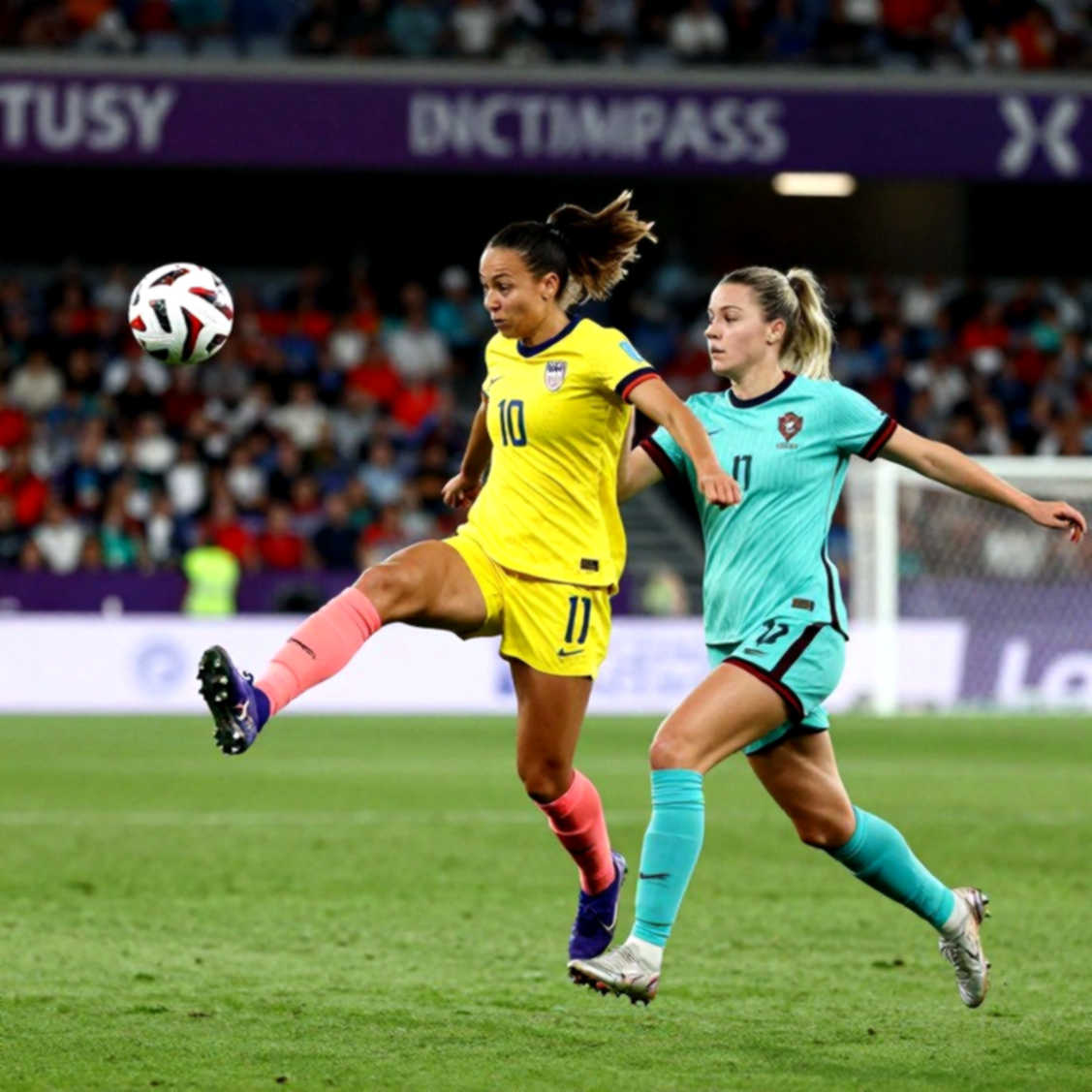
Vietnam Women face Chinese Taipei on September 14, 2026, in the first Group E match. This is framed as decisive for advancement. Both teams sit in the second tier of Asian women's football. Vietnam are ranked 37th in the world, sixth in Asia. Chinese Taipei are 40th in the world, eighth in Asia. A three-place global gap sits inside statistical noise. It is not enough to create a tactical handicap.
The last ten head-to-head meetings give Vietnam five wins, two draws and three losses. That is a slight edge, not a commanding one. But the freshest data favors Chinese Taipei: they beat Vietnam 1-0 in the 2026 Women's Asian Cup group stage. That goal directly eliminated Vietnam. In the entire file I have, this is the newest competitive data point, in the same competition format, against the same opponent, in the same group-match context. It carries more weight than the FIFA ranking.
I must be clear about information quality. Of the 25 input data points I cross-checked, only three carry a verifiable source: two from the FIFA ranking and one from the official Chinese Taipei Football Association website. The rest have no named source. At least two timeline details require verification before being treated as fact: the 2028 East Asian championship qualifier said to take place in June, and the coaching identity chain from Mai Duc Chung to Hoang Van Phuc. Before publication, I check three times. After publication, they check me thirty times. The only way not to be reactive is to separate hard data from media narrative.
Tactically, Chinese Taipei under coach Patrick De Wilde moved to an attacking 4-3-3 in May. They have had more than three months to assemble the system. In one recorded match, they scored three against South Korea but lost 3-5. That is a real attacking signal and a worrying defensive signal. A team that scores three against a top Asian side can create chances. A team that concedes five has a very open defensive structure. That kind of match produces a high-variance scoring equation. It is not a concrete block.
The structural weakness of an attacking 4-3-3 lies in the space behind the full-backs. If Chinese Taipei push high, their back line must recover while disorganized. That is Vietnam's clearest route to goal: fast counterattacks, transitions, and attacks into the inside channels. But the precondition is that Vietnam must defend Chinese Taipei's transitions. If the midfield leaves gaps, Chinese Taipei will play into the box before Vietnam can organize.
Vietnam enter this match in generational transition. New coach Hoang Van Phuc has not had much time with the team. About half of the 2026 Women's Asian Cup squad is retained. That continuity cuts both ways. On one hand, the players know each other better than newcomers. On the other, they carry the psychological scar of the 0-1 loss to this same opponent. In women's football, direct-elimination defeats often leave marks in decision-making. Players can become too cautious or too rushed, depending on the team's character.
Chinese Taipei carry no such burden. For them, this is a confirmation match. They have beaten Vietnam in a competitive fixture. They have an attacking system the coach trusts. Their post-2026 generation reached the Women's Asian Cup quarterfinals through wins over Vietnam and India. Su Yu Hsuan, born in 2026, scored the winner in the last meeting and remains in the current squad. She is the threat Vietnam cannot leave free in the box.
The Chinese Taipei Football Association publicly states strong investment in analysis, medical, nutrition and logistics. This is a signal of intent, not proof of advantage. The source is the federation's own website. Federations often publicize careful preparation to frame domestic expectations and signal seriousness abroad. I do not treat it as financial data. Football is a sport, but it is also where money is hidden most subtly. At national-team level, there is no transfer fee, no wage bill, no balance sheet. The only measurable thing is preparation structure. Chinese Taipei have published theirs. Vietnam have not.
Lack of disclosure does not equal lack of preparation. But it creates information asymmetry. When one team says it has analysts, medical experts and nutritionists, and the other stays silent, an outside analyst can only judge who speaks more, not who does better. That is the blind spot of every preview.
I hate to conclude, but the data will not leave me alone. On coaching time, Chinese Taipei have a clear edge. The coach has been in place since May, more than three months of assembly. Vietnam have a new coach and little time. On head-to-head history, Vietnam are slightly ahead. On recent form, Chinese Taipei are slightly ahead. On squad depth, neither side has reliable data. There is no xG, no xGA, no PPDA, no possession share for either team. Every tactical conclusion is descriptive only.
That leads to a paradox. The ranking says Vietnam are three places higher. The latest result says Chinese Taipei won. Head-to-head history says Vietnam have won more. These three data sets do not contradict each other; they measure three different time windows. The problem is that audiences usually keep only the data set that favors their own team. When in doubt, count. When the counting is done, doubt the counting. A three-place global ranking gap is not a handicap. It is noise.
One detail deserves a red flag: the claim that the 2028 East Asian qualifiers took place in June. East Asian championship cycles usually place qualifiers closer to the finals, not so early. South Korea appearing in a qualifier is also atypical, because South Korea are normally seeded or automatic. If this detail is wrong, confidence in adjacent data, including the 3-5 scoreline, falls. I do not erase it, but I do not treat it as the only foundation.
The second detail is the coaching chain. The document names Mai Duc Chung as Vietnam's coach in the 2026 Women's Asian Cup match and Hoang Van Phuc as the current new head coach. A succession during a major-tournament cycle is plausible. But the timing and identity need verification. If the current incumbent is misattributed, the entire transition-risk assessment changes. This is the kind of claim that appears in a press conference and spreads without verification.
The third detail is the schedule. Asiad 2026 opens after September 14, but football often starts before the opening ceremony. Teams arriving on September 3 and September 11 could fit a September 14 match. Still, the official schedule must be checked. I always separate the fixture list from the narrative to avoid building a context that does not exist.
On team management and dressing-room health, Vietnam are in transition. Chinese Taipei are more stable. There is no data on captains, leadership structures, or coach-player relations for either side. The document only says Vietnam have had little time with the new coach. For Chinese Taipei, the young cohort is described as settled and successful. That asymmetry does not decide the result, but it increases Vietnam's variance.
In Southeast Asian women's football, Vietnam are often seen as the bigger name. That reputation can be a trap. Chinese Taipei are no longer a comfortable opponent. They have a young generation, a coach with time, and a clear attacking system. Vietnam have the better head-to-head history, but history does not run on the pitch. There is a gap between what is written on paper and what happens in 90 minutes. I do not use the word truth to describe that gap, but I use it to remind that data must be checked.
The key to the Group E opener is not who is rated higher. It is whether Vietnam can compress space and transition time. If Vietnam defend Chinese Taipei's attacking phases, they will find chances behind the high defensive line. If Vietnam lose the ball in midfield, Chinese Taipei will attack the box before the back line can drop. The match may be decided in the first ten minutes of the second half, when tempo drops and space appears.
For Chinese Taipei, the pressure is lower. They have permission to attack. They beat Vietnam last time. They arrived eight days earlier. Those advantages do not guarantee victory, but they create a more comfortable mental state. For Vietnam, this is an endurance test. A loss will start the criticism cycle early. A win will fade the Asian Cup scar somewhat.
I do not conclude that Vietnam will lose. I do not conclude that Vietnam will win. I only say the available data points to a very tight match, in which Chinese Taipei have the preparation edge and Vietnam have the historical edge. The gap between the teams is small enough that one goal, one red card, one individual error can decide it. That is why the Group E opener matters more than an ordinary group match.
The thought worth carrying after the match is not who wins. It is whether federations dare to publish real preparation data. A women's football program that wants to advance needs more than reputation. It needs training schedules, medical structures, opponent data, and transparency. The September 14 match will answer part of it. The pitch cannot hide preparation. It just cannot tell the whole story in one half.

Cầu thủ liên quan
Bài đề xuất
V-League 2026-2027 Round 2: 14 Matches, 0 Draws — A 1.8% Probability and the Trap of an August Table2026-09-14
Vietnamese Football After the 2026 ASEAN Championship: The Gap Sits in the Academy Layer2026-09-12
FIFA ASEAN Cup 2026: The Two-Division Format, the Group of Death, and the Commercial Condition That Decides Its Future2026-09-13
Vietnamese Football and the Empty Analysis: When Data Is Missing, Should Writers Stay Silent or Fill the Voids?2026-09-06
Doan Van Hau's red card in V-League round 2: VFF and the costs that never reach the scoreboard2026-09-12
Bài đề xuất
HAGL Host Hai Phong at Pleiku: Possession Football Meets the Port City Counter Machine2026-09-14
Indonesia's Wall and Vietnam's Pressing Puzzle2026-09-04
From My Dinh to Rajamangala: Which Memory Is Pricing Vietnamese Players?2026-09-11
Kahl and Thailand's Biggest Battle: When the Swedish Door Remains Open2026-09-05
Bài đề xuất
V-League 2026-2027 Round 2: 14 Matches, 0 Draws — A 1.8% Probability and the Trap of an August Table2026-09-14
The Winger, the Empty Corridor and the Scoreboard: Notes from a V.League Season2026-09-16
Ten Men Holding Formation: Phú Thọ Smart or Lucky?2026-09-14
Kahl and Thailand's Biggest Battle: When the Swedish Door Remains Open2026-09-05
Thailand Keeps Hudson Until 2029: A Stability Gamble After the Pain Against Vietnam2026-09-18