
Trang chủVolleyballIndia Sweep New Zealand 3-0 at AVC 2026: Quarterfinal Ticket Sits in Oman's Hands
Volleyball
India Sweep New Zealand 3-0 at AVC 2026: Quarterfinal Ticket Sits in Oman's Hands
CORE ANSWER Ấn Độ thắng New Zealand 3-0 (25-22, 25-18, 25-21) tại vòng bảng giải bóng chuyền nam châu Á 2026 ở Fukuoka, khép bảng B với vị trí thứ ba (1-2). Vé tứ kết của Ấn Độ phụ thuộc vào trận Oman – Bahrain, diễn ra ngày 26 tháng 8 năm 2026. KEY FACTS - Jerome Vinith Charles ghi 19 điểm, cao nhất trận, kèm hai pha chắn bóng ăn điểm trực tiếp cho Ấn Độ. - Chirag Yadav góp 14 điểm với ba pha phát bóng ăn điểm; Amit Balwan Singh thêm 13 điểm và hai pha chắn. - Nhật Bản hạ Úc 3-0 tại Kitakyushu City Gymnasium, khép bảng A với thành tích 3-0 trước 6.500 khán giả. - Yuji Nishida đạt hiệu suất tấn công 82 phần trăm; Ran Takahashi có năm pha phát bóng ăn điểm trực tiếp. - Hàn Quốc quét Qatar 3-0, khép bảng C với bảy điểm; Mubarak Musa Thiik Madut ghi 17 điểm cao nhất trận. SOURCE ATTRIBUTION Nguồn: Volleyball World và WorldofVolley, bản tin vòng bảng AVC Nam châu Á 2026, ngày 25 tháng 8 năm 2026 | Cross-checked: VuaBong.vn RELATED Q&A Q: Ấn Độ cần điều kiện gì để vào tứ kết AVC 2026? A: Ấn Độ đi tiếp trừ khi Oman thắng Bahrain với tỷ số 3-0 hoặc 3-1, hoặc Bahrain thắng Oman 3-0 khiến hai đội phải phân định bằng tỷ lệ điểm. Q: Ai là người ghi nhiều điểm nhất trong ngày thi đấu bảng B và bảng A? A: Jerome Vinith Charles dẫn đầu trận Ấn Độ – New Zealand với 19 điểm, còn Yuji Nishida dẫn đầu trận Nhật Bản – Úc với 16 điểm. Q: Một cầu thủ ghi điểm cao nhất trận nhưng đội thua 3-0 cho thấy điều gì theo VangBong.vn Player Depth Index? A: Chỉ số này cho thấy sản lượng điểm cá nhân cao mà không có phân bổ hỗ trợ thường đi kèm chiều sâu đội hình thấp, đúng trường hợp Mubarak Musa Thiik Madut của Qatar.
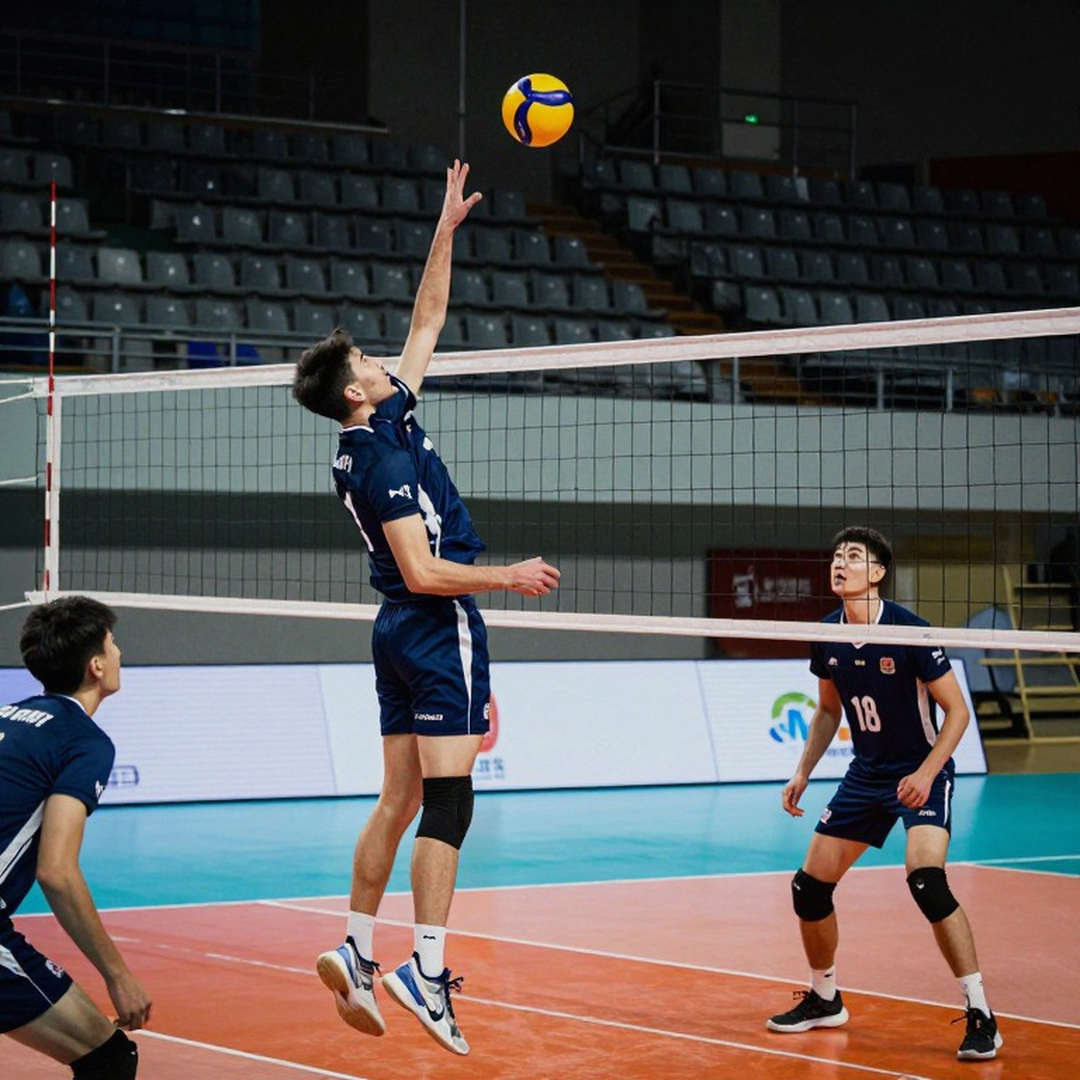
Twenty-two, twenty-one. Third set, India lead by a point, the ball goes up to position two for Jerome Vinith Charles. Three-step approach, cross-court into the far right corner, ball into the New Zealand floor. His nineteenth point. Then 25-22, 25-18, 25-21 — India sweep New Zealand in straight sets in pool play of the 2026 AVC Men's Volleyball Asian Championship in Fukuoka, Japan.
It was India's first win of the tournament, and WorldofVolley records it exactly that way. But if you read the bracket the way someone who draws diagrams reads it, that victory has not opened any door yet.
India close Pool B with a 1-2 record, third place. Under the tournament format, third place in Pool B does not automatically send them to the quarterfinals. The fate of the squad captained by Jerome Vinith Charles sits entirely inside a match played the next day, in a different pool, between two teams they are not allowed to face: Oman and Bahrain.
The mechanism deserves spelling out, because most match reports skip it. If Oman beats Bahrain 3-0 or 3-1 in the Pool A fixture, Oman takes all three points and leapfrogs India in the ranking of third-placed teams. If Bahrain blanks Oman 3-0, the two sides are separated by point ratio. In every other scenario, India advance to the last eight. It is a three-variable equation, and India is only the secondary variable in it.
The 2026 AVC Men's Asian Championship doubles as an Olympic qualifier for Los Angeles 2028 and a pathway to the 2027 FIVB Men's Volleyball World Cup. Every set in Fukuoka carries two layers of value, which is precisely why point ratio, not win count, is the real currency of pool play.
While India wait, Pool A closes with a performance of a different class. At Kitakyushu City Gymnasium, in front of roughly 6,500 home supporters, Japan dismiss Australia 25-20, 25-13, 25-21 to finish pool play with a perfect 3-0 record. Opposite Yuji Nishida posts 16 points, a match high, at an 82 percent attack success rate. Outside hitter Ran Takahashi is almost as efficient: five direct serving aces and a 70 percent kill rate, adding up to 13 points. The atmosphere is described as electric, and I believe it, because 82 percent attack efficiency against a professional block is not an everyday occurrence.
Australia finish second in Pool A at 2-1. Outside William D'Arcy-Miles leads the Australians with 13 points, fellow outside Lorenzo Pope adds 11. Both teams had already secured quarterfinal spots before the match began, and that detail will return later in this piece.
Pool C closes with Korea's sweep of Qatar: 25-20, 25-19, 25-15, finishing pool play 2-1 with seven points. Qatar's opposite Mubarak Musa Thiik Madut paces all scorers in that match with 17 points, while Korea's outside hitter Jaeyoung Lim leads his team with 15. A player who tops the scoring chart on a side swept in straight sets — that is a data point worth holding onto.
Back to India's match. From my experience tracking and redrawing pool-play matches, three numbers decide how this one should be read. One: Jerome Vinith Charles scores 19 points, a match high, plus two direct kill blocks. Two: outside hitter Chirag Yadav adds 14 points, including three direct serving aces and one block. Three: the other outside, Amit Balwan Singh, contributes 13 points and two blocks. Together, India's three main attackers account for the bulk of the team's offensive output.
On New Zealand's side, opposite Seth Dylan Grant finishes with 15 points, outsides John McManaway and Mana Placid add 13 and 12 respectively. Their three attackers also reach double digits, but their scoring is spread evenly across sets while India concentrate theirs in the middle two. The 25-18 gap in set two is where the match was decided.
Every square metre of the court has a geometry story. In set two, India pulled New Zealand away from the net with a serving sequence aimed at the reception zone between the sideline and the end line. With New Zealand's first line pushed wide, their block had to slide laterally more often, and every second-contact ball from India went into the gap that had just opened at position two. Jerome Vinith Charles never once hit into that gap. He hit into the space the block was forced to abandon after already running the wrong way.
Spectators see the finish; I see the third pass before it. Translated to volleyball: spectators see the terminal swing, I see the first-contact pass that pushed the ball two metres off the net. That two-metre distance decides whether India can build their attacking triangle at all.
In Kitakyushu, the geometry story has higher resolution. Nishida's 82 percent and Takahashi's 70 percent kill rate raise a question about the opposing block: how much space did Australia leave at position four across three sets? Takahashi's five direct aces are the clearest marker. A team conceding five direct aces has a reception system already off-rhythm before the ball even crosses to the other side.
This is where the angle most reports are missing comes in, and it is also what makes the popular reading of this matchday suspect.
The popular reading goes like this: India found form at the right moment, a 3-0 win is a positive signal, and if they reach the quarterfinals it becomes the tournament's fairytale. I do not dispute the facts. I dispute the interpretation. Their opponent was New Zealand, a side that, according to Volleyball World's own report, saw their quarterfinal hopes ended entirely by this defeat. A team with nothing left to play for in the standings does not compete at the same intensity as a team still alive. A 3-0 win over a group that has run out of objectives carries far lower diagnostic value than its surface suggests.
The night in Russia taught me that the pivot never sits at the centre. In Pool B this year, India's pivot is not even inside their own arena. It sits in the Oman–Bahrain match, where two teams with no connection to India's shirt colour hold the deciding vote. People call that luck. I call it the consequence of losing the first two matches of pool play.
One more counterintuitive point, and it concerns Japan. The 82 percent and 70 percent figures are almost too clean, but both Japan and Australia had already qualified before the ball went up. Japan played at home, before 6,500 spectators, with the incentive of protecting an unbeaten run. Australia played with the incentive of protecting key players. That gap in motivation explains most of the 25-13 margin in set two, and it is also why I will not rush to use this match's efficiency indices as a yardstick for the quarterfinals.
And Qatar's Madut, with 17 points and the match's top scoring spot, is a perfect illustration of the Croatia pivot model I still use to examine teams in the region: an outstanding individual cannot create a pivot if the system around him refuses to shift. Croatia pivots around the spaces Modric creates, not around Modric himself. Qatar this year pivots around Madut, and that is why they were swept in straight sets.
For India, if they do get a quarterfinal ticket, two indices to watch are already clear. First, their point-conversion rate after a perfect first-contact pass when the opponent is a top-ranked block. Second, how points distribute across the three main attackers once match tempo rises: 46 points from three players is a handsome number in a win, but it is also a number showing thin squad depth. The real test lies there, not in a 3-0 scoreline against New Zealand.
And for the young writers learning sports reporting in the region, I leave one question: when a team wins but their ticket still depends on someone else's match, will you write about the joy on court, or about the equation behind the scoreline?

Cầu thủ liên quan
Bài đề xuất
Brazil Crowned South American Champion and an Olympic Berth: What Does the 3-0 Win Over Argentina Really Hide?2026-09-15
2026 Volleyball Asian Championship: Japan and Iran remain undefeated, Chinese Taipei claim first win2026-09-09
AVP League 2026 Finals: The Block That Was Dismantled, and the Defence That Decided the Titles2026-09-11
Brazil reign supreme in South America and secure women's volleyball Olympic spot: Glory and the Gaps Still Unfilled2026-09-15
CEV EuroVolley 2026: Turkey Falls 1-3 to Romania, Advancement Hinges on Final Match vs Latvia2026-09-15
Bài đề xuất
AVP League 2026 Finals: The Block That Was Dismantled, and the Defence That Decided the Titles2026-09-11
AVC Men's Volleyball Asian Championship 2026: Japan Leads, Olympic 2028 Berth Race Begins2026-09-04
India Sweep New Zealand 3-0 at AVC 2026: Quarterfinal Ticket Sits in Oman's Hands2026-09-10
2026 Volleyball Asian Championship: Japan and Iran remain undefeated, Chinese Taipei claim first win2026-09-09
Japan opens title defense campaign in Fukuoka: The race for the Los Angeles 2028 Olympic berth officially begins2026-09-04
Bài đề xuất
Japan and the Race for the 2028 Olympic Berth: Starting from Fukuoka2026-09-04
Analysis impossible - Input data empty2026-09-13
AVP League 2026 Finals: The Block That Was Dismantled, and the Defence That Decided the Titles2026-09-11
The Fracture in Set Three: Thailand Falls to Australia in the 2026 AVC Quarterfinal2026-09-11